Soft Robots Made From Industrial Waste
What if industrial waste could move on its own? This 4D printing method turns sulfur into soft robots that respond to heat, light, and magnetic fields.
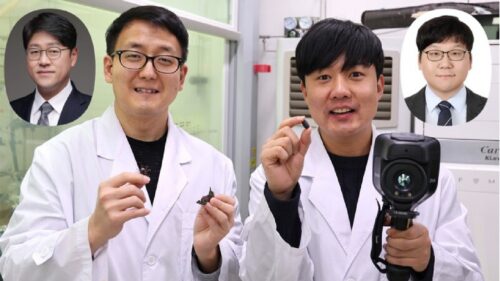
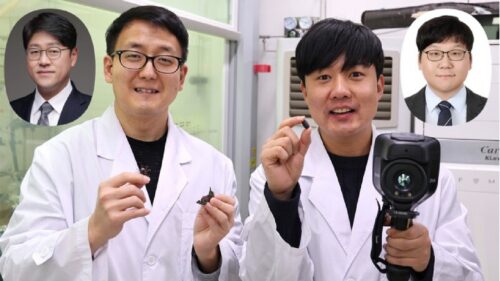
A 4D printing method developed at Korea Research Institute of Chemical Technology, with Hanyang University and Sejong University, uses industrial sulfur waste to create recyclable soft robots that move when exposed to heat, light, or magnetic fields. The method uses waste material and materials that change shape and perform movement without motors or onboard power.
– Advertisement –

The method uses sulfur from petroleum refining, which is often stored or discarded. Researchers converted this material into sulfur-based polymers that can be printed into structures that respond to external stimuli. This enables soft robotic systems that operate through environmental triggers instead of mechanical components.
Unlike standard 3D printing, which produces fixed objects, this process allows structures to change shape over time. The behavior comes from poly (phenylene polysulfide) networks, which show shape-memory properties controlled by temperature. When exposed to heat or light, printed parts can deform and return to programmed shapes.
The team added magnetic particles to enable motion under magnetic fields. Using this, they built composite robots, each less than half an inch in size, that can move without electronics.
A key part of the process is how printed components are joined. A short exposure to near-infrared light triggers a chemical welding effect, where sulfur bonds break and reform at the interface. This allows parts to fuse without adhesives and supports modular assembly.
To demonstrate this, the researchers created multi-part designs based on architectural forms, including a miniature basilica structure and a retractable-roof stadium model. Each was built from separate units that could change shape, showing control over assembly and transformation.
At the end of use, the material can be melted and reused for printing without loss of quality. This supports a closed-loop process where the same material is reused, reducing waste.
The work shows a way to combine material reuse with soft robotics. It addresses challenges where materials need to balance flexibility, response, and sustainability. By using waste material and enabling response to multiple stimuli without embedded systems, the approach points to scalable and sustainable soft robotic designs.