Platform Targets Real-World AI Bottlenecks
A new emulation system focuses on validating AI infrastructure under realistic workloads, helping operators optimise performance before deployment.
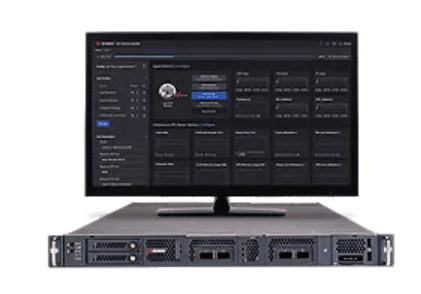
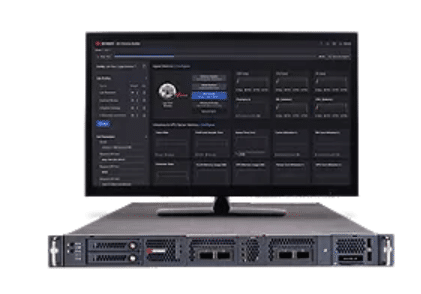
As AI adoption shifts from model training to real-world deployment, a newly launched platform from Keysight Technologies aims to solve one of the industry’s biggest challenges: validating and optimising inference performance at scale. The system emulates real-world AI workloads to help organisations test their infrastructure before it goes live, reducing risks associated with latency, bottlenecks, and cost overruns.
– Advertisement –

The platform is designed to replicate how AI inference behaves across the full stack, including compute, networking, memory, storage, and security layers. This marks a shift from traditional benchmarking tools, which often rely on synthetic traffic or isolated GPU testing and fail to capture the dynamic, latency-sensitive nature of inference workloads.
The key features are:
- Real-world AI inference workload emulation at scale
- Industry-specific benchmarking for vertical use cases
- End-to-end validation across the full AI infrastructure stack
- Subsystem-level bottleneck detection and analysis
- Integration with AI data centre digital twin environments
By recreating realistic usage patterns, the solution enables AI cloud providers, hardware vendors, and developers to analyse how infrastructure performs under actual operating conditions. It also supports industry-specific modelling, enabling enterprises in sectors such as finance and healthcare to simulate their AI deployment scenarios more accurately.
A key highlight is its integration with digital twin environments used for simulating AI data centres. This allows teams to validate infrastructure designs and performance virtually, before investing in physical hardware. The approach is expected to accelerate deployment timelines while minimising costly rework.
The platform also introduces subsystem-level visibility, helping engineers pinpoint performance bottlenecks across the stack. This granular insight enables targeted optimisation, reducing overprovisioning and improving overall efficiency.
With inference increasingly becoming the critical factor for AI return on investment, tools that can accurately emulate real-world conditions are gaining importance. Pre-deployment validation is quickly becoming a necessity, especially as AI data centres scale in size and complexity.
Click here for the original announcement.