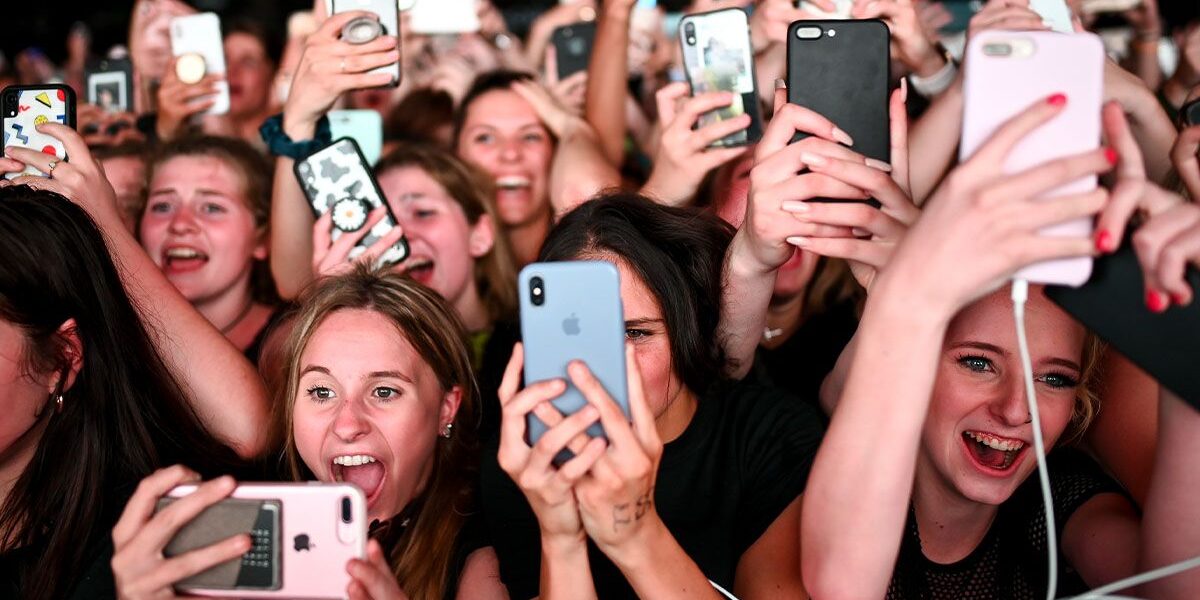

Dating back to Elvis Presley hysteria and Beatlemania, society has a long history of devotion to famous artists. But what was once reserved for bedroom walls, school lockers, and gig venues is now mass culture. Enter the modern superfan, whose obsession and engagement has built a whole economy around stars like Taylor Swift and Blackpink. Their adoration, combined with spending power, has created serious commercial opportunity for labels and brands that know how to tap in.
In the past, fan engagement was more contained and often mediated through formal channels such as fan clubs, letters, and gifts, says Jo Charrington, president of Universal Music Group label Capitol Records UK, which represents Sam Smith and Olivia Dean. “Today, fans still show up in force at shows, but they also exist alongside artists in real time online, commenting, sharing, reacting, and shaping the narrative as it unfolds,” she says. “As a result, fandom has evolved from something you primarily witnessed in moments to something you actively engage with every day. It has become a two-way relationship, where artists and their teams can listen, respond, and tailor experiences in a much more direct and meaningful way.”
K-pop culture paved the way for this new era of highly devoted superfandom. At major fashion shows, you might see legions of screaming fans outside the venue, surrounded by balloons and signs, and clutching photos of their idols who are brand ambassadors, from Enhypen (Prada) to Felix of Stray Kids (Louis Vuitton), or Blackpink’s Jisoo (Dior). Some fans follow their idols around the world, running fan accounts devoted to tracking their every move. And now, as once localized culture goes global, Western audiences have delved into K-pop superfandom, too. And more broadly, they’ve learned how to level up their superfandom, to mirror the K-pop approach, even for Western stars like Swift.
The rise of short-form video — and its addictive algorithm that has brought even the most niche subcultures into the mainstream — provides fertile ground for superfandoms to flourish. “In the past, fandom was largely driven by proximity and limited access, with offline experiences such as concerts serving as the primary touchpoints. Today, it is continuous, global, and always-on,” says Joon Choi, president of K-pop record label Hybe’s Weverse, a social platform built just for fandoms to connect across Hybe’s roster, which includes K-pop groups BTS, Enhypen, Illit, and Katseye. “This shift reflects a fundamental change in engagement: it is no longer defined by how much content is available, but by how connected fans feel to the artist and to each other. Digital platforms have lowered the barrier to interaction, enabling real-time communication and community-building that transcends geography.”
As online fatigue sets in and Gen Z feels like they’re constantly being sold to, superfandom offers tangible, shared lived experiences that allow people to meaningfully connect with each other. In the era of AI slop, “the most alive, human corners of our online worlds are often powered by superfandom activity,” says Annie Corser, senior trends editor for pop culture and media at Stylus. “From fan fiction to artworks, companion content, and hive projects boosting ticket sales, shaping discourse, and maintaining an ecosystem of public devotion, [superfans are] hyper, often fanatically active in their adoration. It’s a source of meaning, resilience, and permanence in a slippery, unforgiving world.”
Indeed, the uncertainty of today’s geopolitical landscape means consumers are seeking connection more than ever. “Ultimately, superfandom is growing because it fulfills a deeper need — not just for entertainment, but for identity, belonging, and meaningful connection,” Choi says.