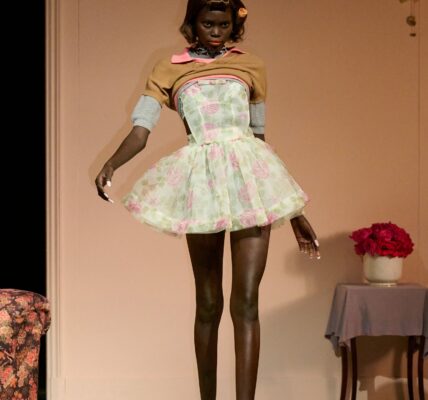

I was six the first time I was told to lose weight, eight when I learned to suck in my stomach, and 15 when I began to starve myself. Growing up, I believed success was found in the art of controlling and manipulating the body, and my particular one was seen as a problem. A grandparent would comment on what I was eating. A friend’s mom would tell me how pretty I would be if I lost a little weight. When my mom searched the women’s department for clothes that would fit my nine-year-old frame, I shrank from the disapproving looks of watchful strangers. I strove for perfection, upset if I received anything less than an A on a test, constantly on a mission to be perceived not only as good, but immaculate. The only thing I could not seem to control was my body.
The feeling simmered for years, until, deep in the awkward trenches of high school, I decided I was finally prepared to wage the ultimate fight. It was 2017, Instagram was at its peak, and beauty was the overlined lips and BBLs of white women masquerading as Black. At my arts high school in Oakland, the aesthetic was weirder, more eclectic, and yet the girls who received the admiration of our peers were thin but curvy, often ethnically ambiguous—reminding us that, even in one of the most progressive and rebellious cities in the country, ideals of beauty remained as narrow as what was depicted on our phone screens.
Most of us, myself included, did not naturally possess this “ideal” body. As a mixed Black girl, I received countless compliments for my green eyes, while attributes that were unmistakably Black, particularly the size and shape of my body, were judged harshly. My body was not the trend. It was the object that the trend had cinched, commodified, and whitewashed.
I wanted to be seamless, perfect, invincible, and in order to achieve this I believed I needed to be skinny. I went on a diet and ran miles after school. At home I carefully measured the declining circumference of my waist. I ate two meals a day, and then only one, and then limited my diet to just eggs one week, apples another. My hair began to thin and fall out until my hairstylist refused to cut or color it, fearing it would disintegrate in her hands.
My body, however, had become an object of desire—I was catcalled, harassed, or groped on the way home from the movies or school. I now fit the flat-stomached, wide-hipped ideal of the 2010s: small enough to clutch around the waist but with sufficient curve to grasp. I was not overtly alarming to look at, like the images I had seen of white anorexic women. As with many Black women with eating disorders, my muscles clung to my bones, my thighs stood their ground, regardless of the weight dropping from my stomach and breasts. My body, genetically adept at survival, fought to keep me alive.
Later, when I was diagnosed with anorexia, there was always an addendum: atypical. Essentially, I was not underweight, I was simply starving. I lost half my weight between the ages of 15 and 17. Sometimes I picture severing myself down the middle and holding one half of my body next to the other: This is how much I diminished myself in the pursuit of a body that I believed would allow me to belong.