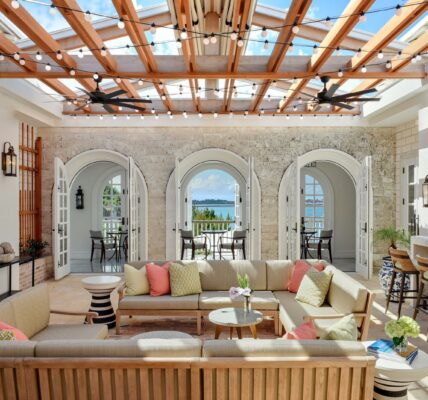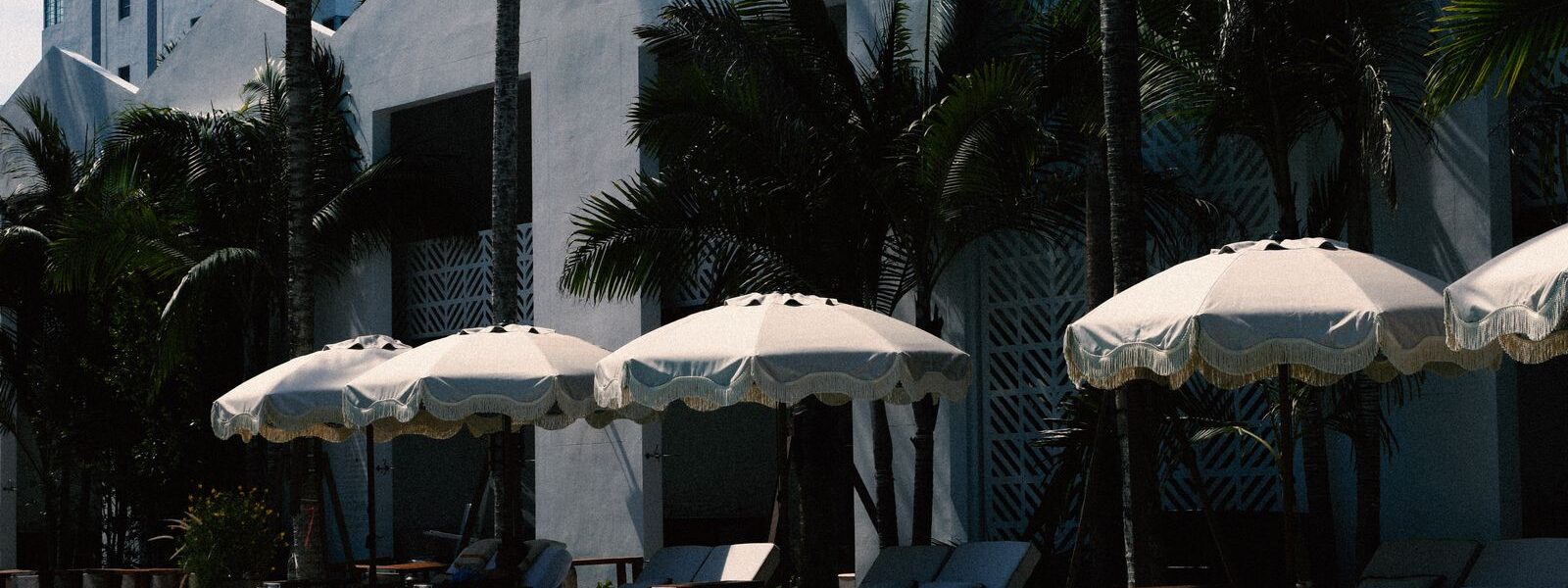

The Magic City’s Delano Hotel—now known as Delano Miami Beach—will reopen shortly after a six-year closure. It has undergone an approximately $100 million renovation.
It’s a famous address (where Madonna once co-owned a restaurant, and where Lenny Kravitz once opened a club in the basement), on a famous strip (Collins Avenue) with plenty of famous hotels, both then and now, in close proximity (the stalwart Setai, the old Raleigh, the dismantled Shore Club, and the reimagined Shelborne among them).
There’s something extra resonant about the Delano for me, though: it is the very first place I ever set foot in Miami Beach. I was a gangly teenager who’d taken the Tri-Rail from West Palm Beach to meet friends from New York City—two girls named Emily, both of whom were having lunch at the Delano with their mothers at a restaurant then called the Blue Door. I even remember exactly where we sat (the terrace is still mostly the same, and now part of a restaurant named Gigi). It was the first time I was invited into a slice of Big City Life outside of Manhattan, and I was immediately hooked. The brassy sun, the kinetic music, the euphoric energy, the beautiful people, the glossy aughts glamor; it was for me. The Delano basically sparked what has become my multi-decade fondness for the 305; I ended up enrolling at the University of Miami in part because of the magnetism I felt from that first hour there, and I moved back to the region in 2017 for the same reason. (Of course, Miami is so much more than a fancy hotel, but this spot opened the door.)

Photo: Nick Remsen
The Delano had (and still has) a kind of queenly presence, with its Art Deco fins capping its turret, like wings on an unusual crown. (These wings once made the building the tallest in Miami Beach.) The edifice has been, for the most part, preserved, at least in its exterior; it’s a site at which you can still feel and see the tempo of the city’s earlier grandeur and ambitions. There’s a pomp and flourish about the 1947-completed structure—about its inlaid terrazzo ingress in sun-baked hues, about its “sawtooth” façade of angular window-banks that flare out almost like theater marquees, about the pleasure-seeking ghosts of the eras that have passed and shifted and danced through its vaulted lobby (which has now been partially restored to its original design with the re-addition of a bridge across the main span).