
Say what you will about the Victorian era, but no one can deny they mastered the art of pattern play. For the elite, “it wasn’t enough to use a single wallpaper in a room,” says Washington, D.C.-based interior designer and author Annie Elliott. Instead, Victorians “routinely installed one paper on the lower portion of a wall, or the dado; another above it; and a wallpaper border just under the crown molding.” Bonus points were earned for wallpapering the ceiling, too.
This, of course, eventually led to wallpaper fatigue—and, in extreme cases, death. “Much of the wallpaper at that time—fabric, too—was made with arsenic,” explains Elliott. “There are worse ways to go, I suppose.”
Bury me in wallpaper, design pros now say, proving what’s old is new again.
“Today’s wallpaper is less about uniformity and more about artistry,” says Houston-based interior designer Paloma Contreras. “Using multiple wallpapers allows you to create dimension and nuance in a way that a single pattern often cannot.”

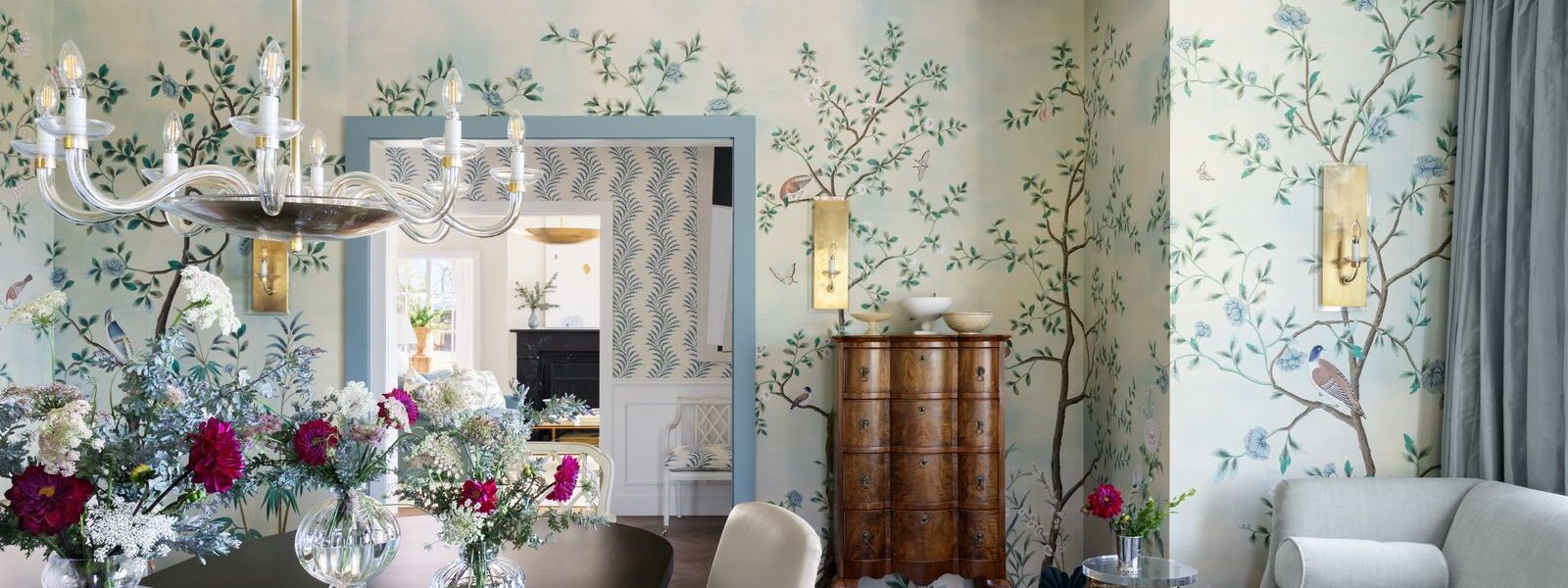
In a recent West Texas project, Contreras paired a soft and traditional chinoiserie in the dining room with a graphic and structured paper in the entry to lend contrast without feeling disconnected. A shared color family and similar level of formality ensure the patterns feel related rather than competing.
“Architectural transitions, like doorways or millwork, are ideal places to introduce a second pattern because they naturally frame the shift,” she says. “In the ’80s and ’90s, wallpaper combinations were often more rigidly divided, like with chair rails, and the contrasts could feel quite pronounced. Today, instead of creating a strong break, we’re looking to create a gentle transition that feels organic.”
In an Oyster Bay guest room, New York-based interior designer Ariel Okin used two different Schuyler Samperton wallpapers to make the space feel “cozy, layered, and eclectically bohemian without screaming with loud patterns or hues,” she says.