
Perhaps no actor has been so thoroughly consumed by their own image as Marilyn Monroe. More than 60 years after her death, her iconography remains instantly recognizable, even to people who have never seen a single one of her films: the half-smile, the platinum curls, the billowing white halter dress. “A student once said to me, ‘I’m so surprised to find out that Marilyn Monroe was an actress,’” author, film historian, and Brooklyn College film professor Foster Hirsch tells Vogue. “‘I thought she was just famous.’”
But appraising Monroe on screen (she appeared in some 30 films in the 15 years before her untimely death) reveals something more surprising—not merely a movie star but a deeply skilled performer with impeccable comic timing, emotional intelligence, and a gift for making even the most carefully manufactured image feel spontaneous.
Yet these talents weren’t well recognized even in her lifetime, Hirsch notes. “Many thought you went to see a Marilyn Monroe film just to bask in that beauty or because she was a film star. And did it require acting skills? Of course it did! She had an instinctive sense of what the camera needed to register an impact. But I don’t think she was given a lot of credit for that, even among critics.”
As Film Forum revisits Monroe’s filmography with a sprawling retrospective in honor of her centennial, Hirsch detailed five performances that complicate her mythology: the dangerous femme fatale Hollywood quickly abandoned, the dramatic actor buried beneath studio typecasting, and the performances that suggest Monroe’s greatest role may have been playing the version of herself the world wanted to see.
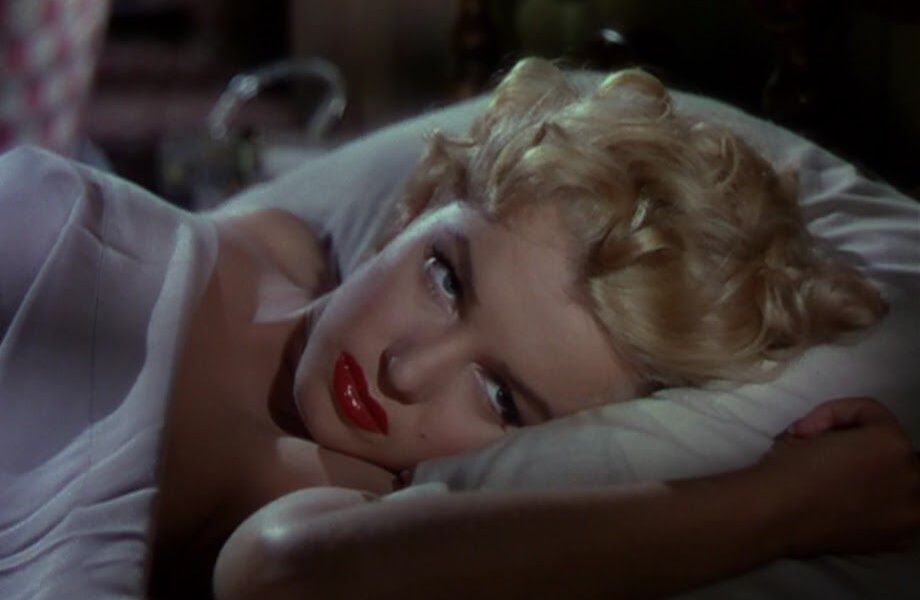
Niagara (1953)

Photo: Courtesy of Film Forum
I’m old enough to have seen the films when they came out, and when Niagara was released, there was, almost instantly, talk about a great new movie star being born. But she’s presented in that film in a way that the studio never presented her again. Here she’s a femme fatale of the film noir kind. She’s dangerous. Her beauty and sexuality are actually lethal to the men around her, and Marilyn’s character knows it. And her studio, 20th Century Fox, decided they wanted to present her primarily as a light comedian. They invented this persona for her of the sexy blonde, which in the 1950s meant a certain sexual repression. They didn’t want her to have a threatening sexual image, but a much more likable and universally appealing one.