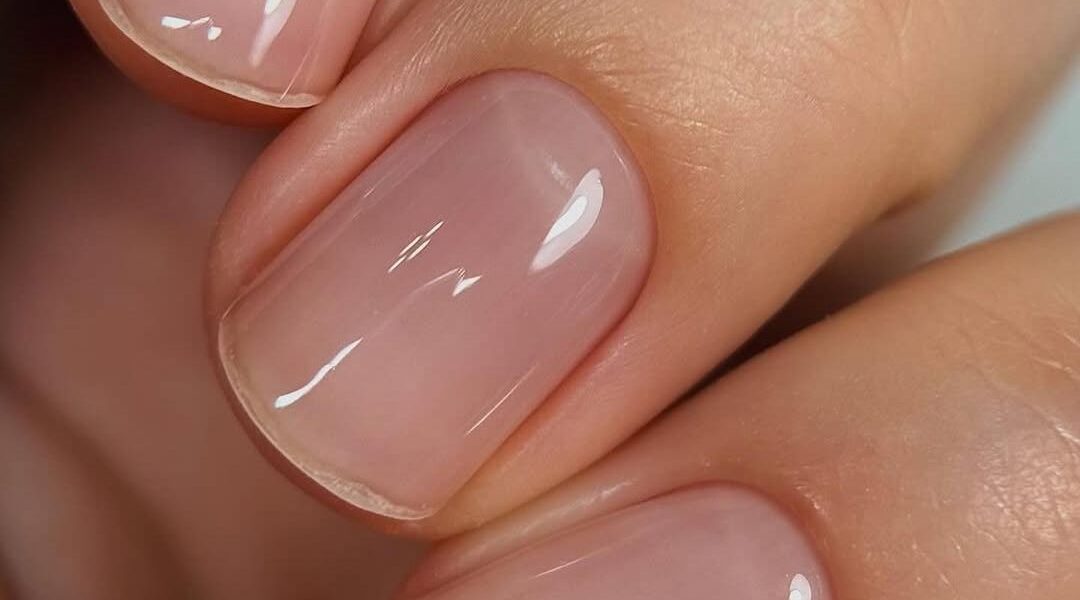

This summer’s nail trends seem to be firmly divided into two camps—Team Minimalism (with Selena Gomez leading the charge) and Team Maximalism (Dua Lipa, Kylie Jenner, and Megan Thee Stallion). If you liked Gomez’s glossy pink soap nails, you’ll love the trending Japanese Manicure. Not to be confused with Japanese gel manicures, a Japanese manicure is a no-polish treatment that gives nails “an elegant pearl shine,” says Darya Kholodova, expert nail technician and the co-founder of Darlings Beauty Lab in New York City.
“The Japanese manicure has become especially popular for clients who are looking for a more natural, low-maintenance approach to nail care,” she adds. If you need a break from the gems, seashells, and colorful swirls on your feed, read on.
What is a Japanese manicure?
Japanese manicures get their name from the Japanese brand P.Shine, which developed a two-step buffing technique consisting of a paste and a powder, says Vera Maximova, a diamond nail technician at Gorgeous Gorgona in New York City.
The paste is made with diatomaceous clay, which comes from the fossilized remains of algae, Maximova and Kholodova explain. The powder, meanwhile, contains beeswax, which helps give the nail a glossy finish. Each is applied with a specialized chamois (a type of leather) buffer, Maximova adds.
The finished result “looks as though you’ve applied a clear gloss polish—but there’s nothing on the nail,” Maximova says. “The plate has a bright, almost unnatural shine that comes entirely from the buffing and the paste.”
What are the benefits of a Japanese manicure?
“The main benefits are a healthy, natural shine, a clean and polished nail, and a relatively quick treatment time,” Kholodova says, adding, “It’s a beautiful choice for summer, when many people prefer to take a break from polish and enjoy their own natural nails.”
However, it’s important to note that while both experts agree on the aesthetic benefits, they disagree on how effective the treatment is at strengthening your natural nails.
How is a Japanese manicure different from a Japanese gel manicure?
The focal point of a Japanese gel manicure is the use of premium gel polishes sourced from Japan, while Japanese manicures don’t use any polish and instead rely on the P.Shine system.
How is a Japanese manicure different from a Russian manicure?
“A Russian manicure is the broader term for an e-file (electric-file) based manicure with precise cuticle work and nail shaping—followed by either a soft gel or hard gel coating, depending on what the nail needs,” Maximova explains.
Both Kholodova and Maximova actually combine Russian and Japanese manicure techniques when providing Japanese manicures, beginning with the detailed cuticle work before applying the P.Shine treatment system.
Who is this service recommended for—and is there anyone who should avoid it?
“The Japanese manicure is a great fit for clients who want their nails to look groomed and presentable without any polish,” Maximova says.
However, if you’ve just removed your gel polish, both experts recommend waiting before booking the service. “After wearing gel polish for an extended period, the nail plate can be more sensitive than usual,” Kholodova says. “Since Japanese manicure involves buffing the natural nail, doing it too soon may cause discomfort.”
Maximova agrees, but offers a different reason. “In our practice, when gel is removed, it’s nearly impossible to remove it completely without damaging the live nail underneath—so we always leave a very thin, invisible residual layer on the nail plate,” she says. “The P.Shine system can’t buff through the residual layer, so the result will be uneven: part of the nail will shine, and part will stay matte. There’s no actual harm in doing it right after gel removal—it’s purely a matter of result quality.”