
“When Taylor Swift came out with her beautiful old mine-cut diamond, I think every jewelry dealer in the world was delighted,” says antique jewelry specialist Catherine Taylor, the buying partner of London-based Sandra Cronan, who specializes in rare, unusual, and eclectic gems. It’s now old news that when Swift announced her engagement to American Football star Travis Kelce in August 2025—with a bezel-set ring featuring a jaw-dropping antique diamond, designed by Kindred Lubeck of Artifex Fine Jewelry in New York—she sparked a surge in interest around narrative-steeped stones. “There was a huge spike in requests for antique elongated cushion-cut diamonds, and it was near impossible to source a comparable stone on the British market,” explains Lisa Levinson, head of UK at Natural Diamond Council.
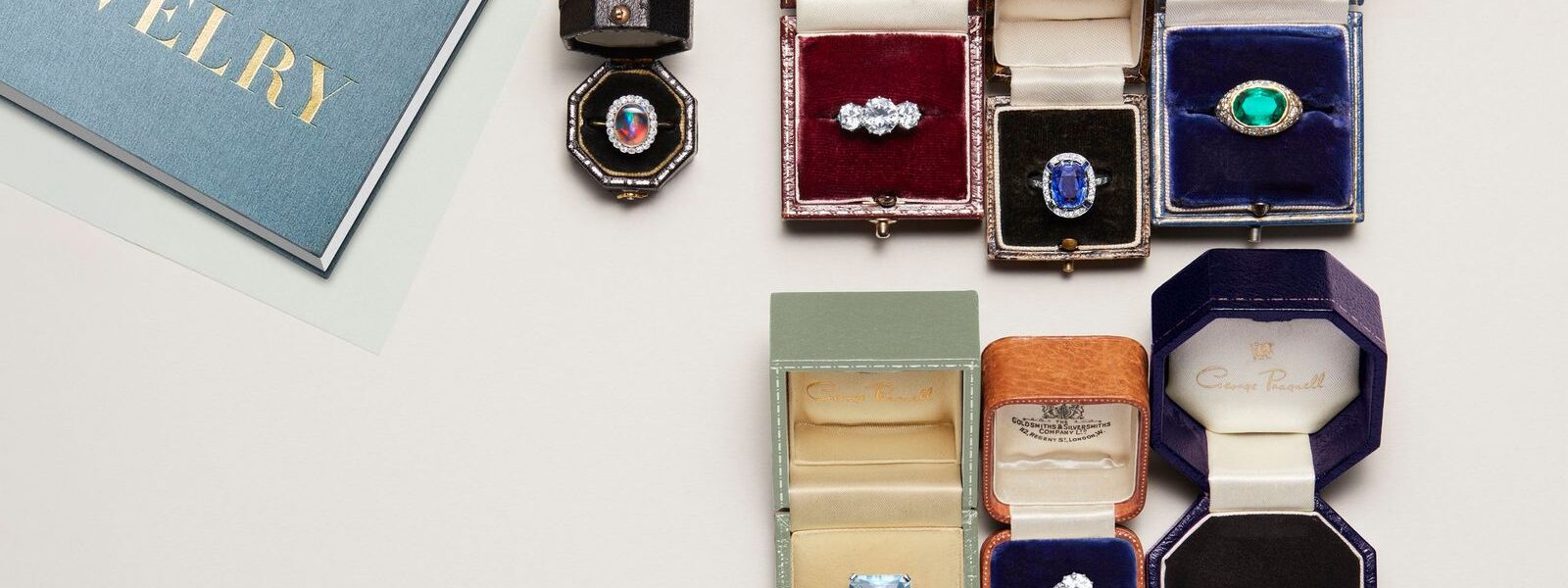
The main draw of an antique stone, in comparison to a modern diamond, is that they are one-of-a-kind, carved and faceted by hand, and steeped in individuality and history. “What draws us to these cuts is their charm. Each diamond is unique, and a testament to the skill of the diamond cutter, who worked by candlelight,” says Charlie Pragnell, managing director of Pragnell. “We often find clients drawn to this story, and the uniqueness of these cuts—it is the beauty of these gems, and the way they react to light that is most desirable.”
But how to ensure you are buying an antique stone or ring that is made to last, has authentic history and provenance, and reflects your personality? Follow these steps for a match made in engagement ring heaven.

Don’t be beholden to cut grades
Traditionally, brides searching for modern engagement rings are usually guided by the GIA-defined 4Cs (cut, clarity, color, and carat). In conventional terms, this would mean seeking out a diamond that has a color as close to brilliant white as possible (most traditional engagement ring brands only use stones that are graded D, E, F, G, H, and I on an alphabetized color chart). However, old mine-cut diamonds with large facets tend to be defined by more characterful yellow and brown hues (tones also preferred by contemporary jewelrs including Lucy Delius and Fernando Jorge), meaning that your attraction to a stone should be guided by your preference for a specific cut, be it Victorian-era cushion, emerald or Asscher (popularized by Art Deco), and the way it catches the light. “People are longing for unique and bespoke designs with diamonds that have personality. Where we previously saw inclusions and imperfections, we now see character,” explains Levinson. “Select your diamond with your heart!”