Three’s a Trend: Gucci, Dior, and Louis Vuitton Lean Deeply Into Art for Their Resort Collections

With fashion’s ultra-democratization, moodboards are no longer under lock and key—nor is a subtle reference only something your most cultured friend can spot and tout at a dinner party. “Digital media has created unprecedented access and documentation of a designer’s process and I think the public relishes in seeing these connections,” art historian Amelia Marran-Baden (aka @Meelzonart) tells Vogue. “Fashion has become bigger than a garment, it’s about building worlds. People enjoy feeling like they are sharing in the designer’s creative process. Perhaps, designers and brands are reacting to that interest and inviting us accordingly.”
This world-building continues off the runway, too. (A show is only 15 minutes, leaving roughly 130,000 more to occupy the internet’s mind before the next one.) For Dior’s Jonathan Anderson, the immortality of cinema is a perfect answer, especially given the designer’s previous costume projects with director Luca Guadagnino for Challengers and Queer. Last week, the French house took to LACMA’s brand-new David Geffen Galleries to re-declare its love for Hollywood. A white bar jacket referenced one made for Marlene Dietrich, who once declared while on set for Alfred Hitchcock’s Stage Fright, “No Dior, no Dietrich!”

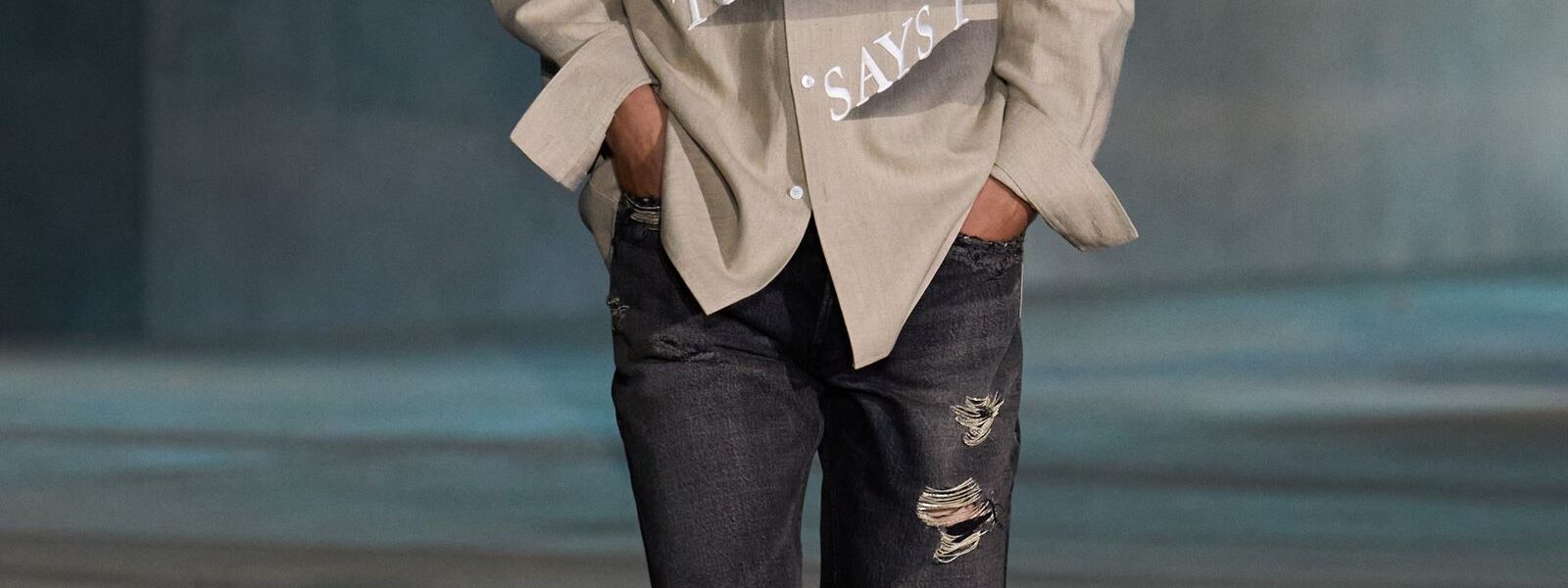
Anderson also collaborated with American pop artist Ed Ruscha, his shadowy and distorted lettering emblazoning a series of button-up shirts. Beyond film, Anderson’s Dior has been noticeably art-centric from the very beginning. “He anchored the set of his first menswear show with two Chardin still lifes, A Basket of Wild Strawberries and A Vase of Flowers,” notes Marran-Baden. “His inaugural couture collection was inspired by the work of ceramicist Dame Magdalene Odundo. He transformed Le Basin Octagonal into what was essentially Monet’s water lily garden at Giverny.” Much like this year’s Costume Institute, “Costume Art,” Anderson places his proclivity for clothing and fine art on an equal pedestal, and at Dior, he is making a point to continue to do so.
Luxury fashion isn’t exactly making an unexpectedly sharp pivot into fine art, but it has also never had a more vested interest in showing off its artistic investments—both creative and financial. With culture as currency, luxury designers are loudly announcing their investment in order to maximize profit through fashion’s ubiquitous nature, and, like Louis Vuitton, houses are using this US-centric resort season to go all-in.