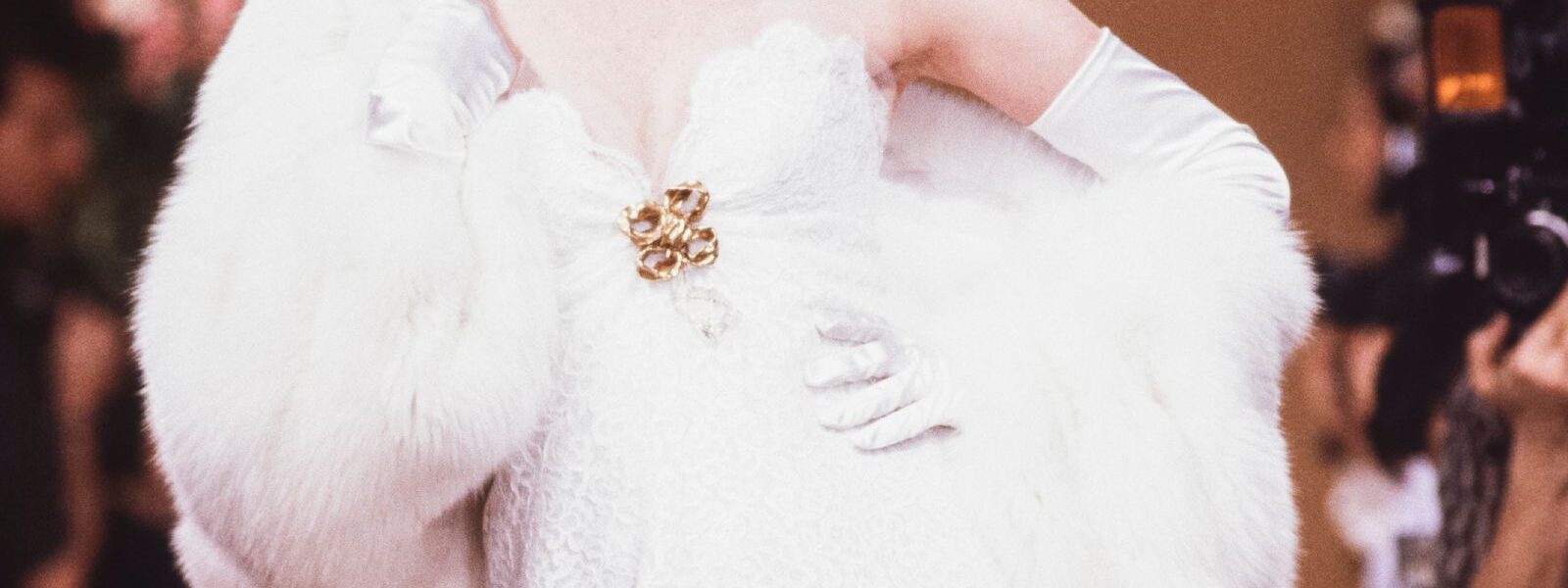

It took a fever dream of ambition and a studio executive’s cunning to transform the orphan Norma Jeane Mortensen into Marilyn Monroe. As Marilyn, she would become the ultimate bombshell, one who dazzled on screen and whose image would be seared into the public imagination, seemingly forever. With her platinum blonde curls and heavy-lidded eyes, she’s worked her way into art and, posthumously, onto many a runway. Now, on the occasion of the 100th anniversary of the actor’s birth, we look at how designers have borrowed some of her star dust.
An AI search revealed that, to a bloodless machine, Monroe’s face and hair are her most defining characteristics. It’s that unmistakable visage, as interpreted by Andy Warhol—both as a silkscreened artwork and reinterpreted in his own photographic portrait as Marilyn—and has been adapted by designers again and again. Most famously by Gianni Versace in 1990 and later reissued by Donatella Versace in 2017 for a new generation. For a menswear collection built around “creative provocateurs,” it was Dries Van Noten, of all people, who used blown-up photo prints of Monroe pasted across T-shirts, button-ups, and jackets. Many others (including Jean-Charles de Castelbajac) haven’t been able to resist the siren’s call of portrait dress featuring that instantly recognizable face. Domenico Dolce and Stefano Gabbana, meanwhile, are among Marilyn’s most ardent fashion fans and, to prove it, have presented at least three collections in which she is referenced. Perhaps their most witty, for spring 1992, the designers referenced a revenge dress made out of a burlap potato sack, which the actor wore in response to a derogatory comment on her style.
Thierry Mugler and Alexander McQueen are among those who have iterated on Monroe’s stage costumes, notably the infamous white flyaway halter dress from The Seven Year Itch and the dressier looks from Gentlemen Prefer Blondes. The most abstract take on Marilyn’s look comes from Jean Paul Gaultier, who in 1984 (pre-Madonna) designed cone bras (a ’50s silhouette that the actor made maximum use of) in cartoonish proportions that were as exaggerated, in their way, as the Monroe myth, which only grows as time passes.